Many battles were fought - and coffee urns emptied - to get distros to where they are today. Here's a quick recap...
Linux distributions have come a long way since the good old days. In the beginning, of course, there were no distros (actually in the beginning there was no Linux, and no space-time, then there was a big bang... - Ed). You'd start with the kernel, somehow bootstrap a barebones system, fetch some GNU tools, mess with the make files, compile those packages, install them, realise you'd got your Makefile wrong, tidy up the mess. Rinse, lather, repeat. It was great fun.
More often than not you had to get these things on CD or even floppy disk in the post, unless you had access to the internet (or a friend in a computer science department). Then in 1992 came SLS, which inspired Slackware and later frustrated lan Murdock into creating Debian. Yggdrasil, the first Linux live CD, was launched shortly after SLS, which required a gluttonous 8 MB of memory and a gargantuan 100 MB of disk space. The first stable version of Debian didn't appear until 1996, by which time Red Hat Linux was on the scene and all of a sudden people realised there was money to be made with that thar Linux.
It's easy to overlook the contributions of those pioneer distributions, and other giants such as SUSE and Mandrake. And indeed those of lesser-heard ones such as Conectiva (a distant ancestor of Mageia that popularised Linux in South America). There's a tendency to just focus on Ubuntu as the great humaniser of Linux.
By the same token, there's a tendency to dismiss desktop Ubuntu today as a sideshow to Canonical's commercial success. Ubuntu continues to do great things for Linux, and is an excellent distribution for beginners and professionals alike. But what happened in the mid-2000s was pretty exciting. Suddenly, here was Linux that anyone could use. It did everything that Windows XP did (except maybe talk to your wireless device). There was an office suite that could mostly open Word documents. Finally, something was standing up to the Microsoft juggernaut...
Things are different now. Microsoft's attitude towards open source has changed and desktop computing isn't the be-all and end-all it once was. In our LXF262 interview with previous Linux Format editors, they point out there's no longer the threat to Linux that there used to be. The web is truly OS-agnostic, so there's no danger of say, your bank not supporting you if you use Linux. We take for granted the ability to watch Netflix or play games, but this would have been unimaginable just a few years ago. Today Intel, Oracle and even Microsoft (sort of) now have their own Linux offerings. A few stand-out distros have emerged that have brought genuine innovation, whether technical or ideological, to the Linux world. So let's have a look at some of them...
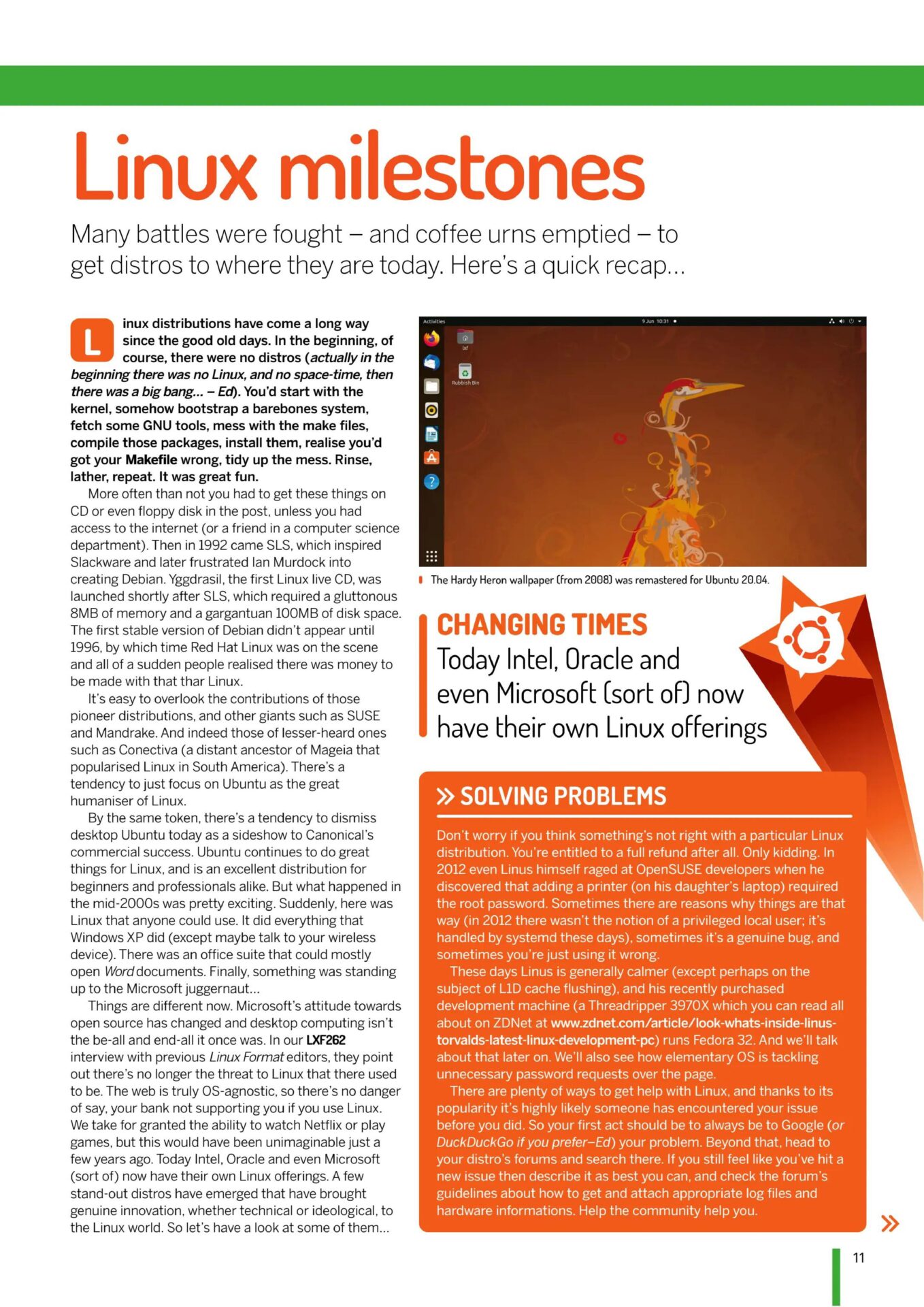
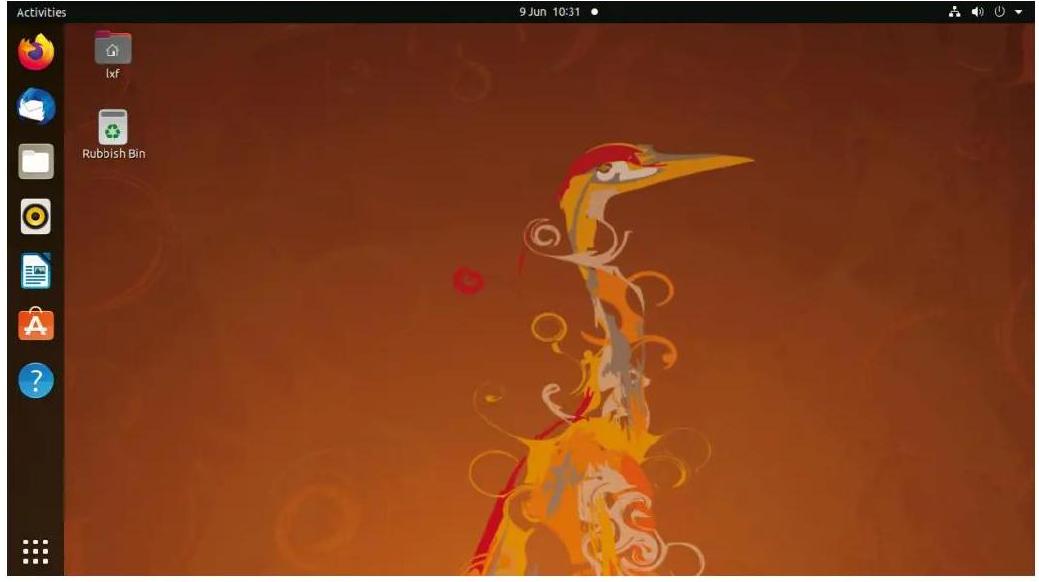
1 The Hardy Heron wallpaper (from 2008) was remastered for Ubuntu 20.04.
CHANGING TIMES
Today Intel, Oracle and even Microsoft (sort of) now have their own Linux offerings
SOLVING PROBLEMS
Don't worry if you think something's not right with a particular Linux distribution. You're entitled to a full refund after all. Only kidding. In 2012 even Linus himself raged at OpenSUSE developers when he discovered that adding a printer (on his daughter's laptop) required the root password. Sometimes there are reasons why things are that way (in 2012 there wasn't the notion of a privileged local user; it's handled by systemd these days), sometimes it's a genuine bug, and sometimes you're just using it wrong.
These days Linus is generally calmer (except perhaps on the subject of L1D cache flushing), and his recently purchased development machine (a Threadripper 3970X which you can read all about on ZDNet at www.zdnet.com/article/look-whats-inside-linus-torvalds-latest-linux-development-pc) runs Fedora 32. And we'll talk about that later on. We'll also see how elementary OS is tackling unnecessary password requests over the page.
There are plenty of ways to get help with Linux, and thanks to its popularity it's highly likely someone has encountered your issue before you did. So your first act should be to always be to Google (or DuckDuckGo if you prefer-Ed) your problem. Beyond that, head to your distro's forums and search there. If you still feel like you've hit a new issue then describe it as best you can, and check the forum's guidelines about how to get and attach appropriate log files and hardware informations. Help the community help you.